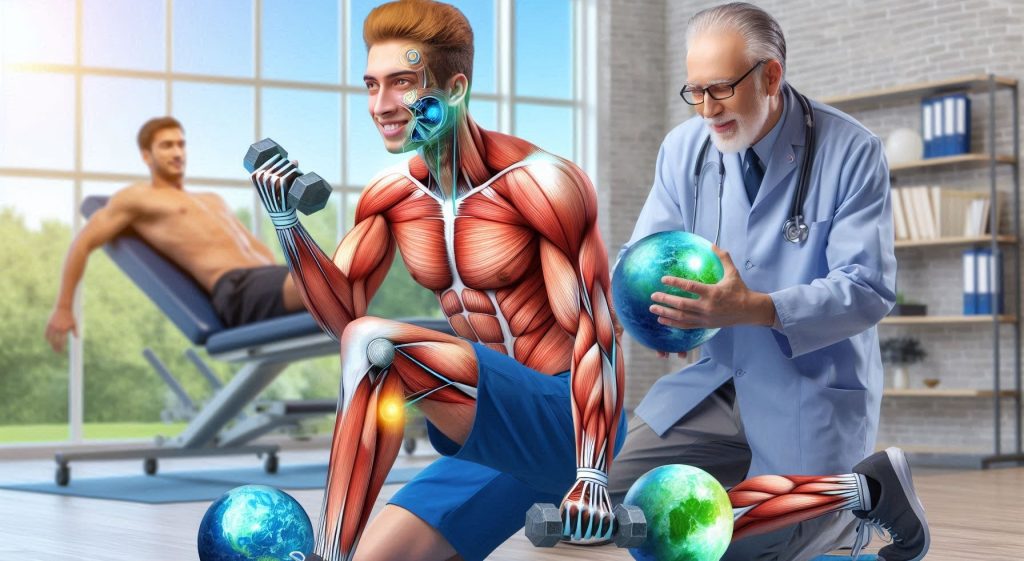
Understanding Low-Impact Exercise
Low-impact exercises are activities where at least one foot remains in contact with the ground or equipment, significantly reducing ground reaction forces and joint stress. Unlike high-impact activities (e.g., running, jumping), they minimize shear, compressive, and tensile loads on bones, tendons, ligaments, and cartilage. Key characteristics include:
- Reduced Mechanical Stress: Forces absorbed by joints are typically ≤1.5x body weight, compared to 3–5x in running ( 2020, Hreljac).
- Controlled Movement: Emphasis on smooth, rhythmic motions over explosive actions.
- Adaptability: Easily modified to accommodate pain thresholds, mobility restrictions, and healing stages.
Examples include swimming, cycling, elliptical training, yoga, and resistance band work. Their versatility makes them ideal for rehabilitating acute injuries (e.g., sprains, fractures), chronic conditions (e.g., osteoarthritis), and post-surgical recovery.
The Importance of Exercise in Injury Rehabilitation
Exercise is not merely adjunctive to rehab; it is therapeutic. 2019, Hall & Brody emphasize that controlled mechanical loading stimulates tissue remodeling. Key physiological roles include:
- Tissue Healing: Mechanical stress upregulates collagen synthesis in tendons/ligaments and bone mineralization.
- Neuromuscular Re-education: Restores proprioception and movement patterns disrupted by injury.
- Systemic Health: Counters metabolic slowdown, weight gain, and cardiovascular decline from inactivity.
However, inappropriate exercise can exacerbate damage. Low-impact modalities provide the “goldilocks zone” of stress—sufficient to stimulate adaptation without impeding healing.
Key Benefits of Low-Impact Exercise During Injury Rehab
a. Maintaining Cardiovascular Fitness
Immobilization rapidly reduces VO₂ max (up to 20% in 2 weeks). Low-impact aerobic exercises preserve cardiovascular endurance:
- Swimming/Water Aerobics: Hydrostatic pressure reduces edema while buoyancy supports joints. Water resistance elevates heart rate without impact ( 2021, Becker).
- Cycling/Elliptical: Sustains aerobic capacity with knee/hip loads 30–50% lower than running.
Outcome: Patients return to daily activities/sports faster due to preserved cardiorespiratory efficiency.
b. Preserving Muscle Strength and Mass
Muscle atrophy begins within 48 hours of immobilization. Low-impact resistance training mitigates this:
- Isometric Exercises: Static contractions (e.g., quad sets) maintain strength without joint movement.
- Resistance Bands/Cables: Provide adjustable tension for eccentric/concentric work.
- Water Resistance: Offers 3D resistance for multi-directional strengthening.
Early low-load resistance reduces atrophy by 40% post-ACL surgery compared to rest alone.
c. Enhancing Joint Flexibility and Range of Motion (ROM)
Stiffness from immobilization prolongs disability. Low-impact dynamic stretching improves ROM:
- Yoga/Tai Chi: Combine controlled movements with deep stretching, enhancing synovial fluid circulation.
- Aquatic Therapy: Warm water (32–34°C) relaxes muscles, allowing greater ROM than land-based exercises.
Impact: Restored ROM prevents compensatory movements that cause secondary injuries (e.g., low back pain after knee injury).
d. Reducing Pain and Inflammation
Exercise-induced analgesia occurs via endorphin release and reduced inflammatory cytokines. Low-impact options are particularly effective:
- Cycling: Increases blood flow, clearing inflammatory mediators from injured sites.
- Swimming: Cold water immersion reduces swelling; warm water soothes chronic pain.
Meta-analysis shows low-impact exercise reduces pain scores by 30% in musculoskeletal injuries versus standard care.
e. Improving Mental Health and Well-being
Injury often triggers depression, anxiety, and fear of re-injury. Low-impact exercise combats this:
- Mind-Body Practices (Yoga/Tai Chi): Lower cortisol levels and enhance mindfulness.
- Group Aquatic Classes: Foster social support, reducing isolation.
Low-impact exercise during rehab reduced depression risk by 26% and improved self-efficacy.
f. Facilitating Weight Management
Weight gain during rehab stresses joints and delays recovery. Low-impact activities burn calories efficiently:
- Brisk Walking: 300–400 kcal/hour (depending on speed/incline).
- Elliptical Training: 400–600 kcal/hour with minimal joint load.
Maintaining a healthy weight reduces long-term osteoarthritis risk post-injury.
g. Accelerating Recovery Timeline
Early mobilization via low-impact exercise shortens rehab duration:
- Angiogenesis: Exercise promotes new blood vessel formation, enhancing nutrient delivery to injured tissues.
- Fibroblast Organization: Controlled loading aligns collagen fibers, improving tensile strength.
Athletes using low-impact cycling post-ankle sprain returned to sport 2 weeks earlier than rested counterparts.
h. Preventing Secondary Complications
Inactivity risks deep vein thrombosis (DVT), pressure ulcers, and metabolic syndrome. Low-impact exercise mitigates these:
- Recumbent Stepper: Enhances lower-limb circulation, reducing DVT risk by 60%.
- Standing/Water Exercises: Prevent muscle contractures and bone density loss.
Types of Low-Impact Exercises Suitable for Injury Rehab
| Exercise Type | Benefits | Ideal For |
|---|---|---|
| Swimming/Water Aerobics | Buoyancy reduces joint load by 90%; water resistance builds strength. | Lower-limb injuries, arthritis, obesity. |
| Stationary Cycling | Adjustable resistance; seated position minimizes spinal/hip stress. | Knee/ankle injuries, post-surgery rehab. |
| Elliptical Trainer | Simulates running with 70% less joint impact; engages upper/lower body. | General conditioning, stress fractures. |
| Walking (Treadmill/Soft Surfaces) | Controlled speed/incline; improves gait mechanics. | Mild sprains, low-back pain. |
| Yoga/Tai Chi | Enhances flexibility, balance, and mindfulness; modifiable for all levels. | Chronic pain, stress-related tension. |
| Pilates | Focuses on core stability, alignment, and controlled movement. | Spinal injuries, postural imbalances. |
| Resistance Bands | Portable, variable resistance; isolates muscles without joint compression. | Rotator cuff tears, post-fracture rehab. |
Guidelines for Implementing Low-Impact Exercise in Injury Rehab
a. Consultation with Healthcare Professionals
- Physical Therapists: Design individualized programs based on injury stage, biomechanics, and goals.
- Physicians: Clear contraindications (e.g., unstable fractures, acute inflammation).
Rule: “If it hurts, stop”—but distinguish between therapeutic discomfort (muscle soreness) and pathological pain (sharp, localized).
b. Starting Slow and Progressing Gradually
- Phase 1 (Acute): Isometric holds, gentle ROM (e.g., ankle pumps).
- Phase 2 (Subacute): Dynamic movements, light resistance (e.g., aquatic walking).
- Phase 3 (Remodeling): Functional training, sport-specific drills.
2017, Borer recommends increasing duration/intensity by ≤10% weekly to avoid overload.
c. Listening to Your Body
- Pain Monitoring: Use a 0–10 scale; cease if pain exceeds 3/10 or worsens post-exercise.
- Swelling/Fatigue: Delay exercise if swelling increases or fatigue persists >24 hours.
d. Proper Form and Technique
- Professional Guidance: Initial sessions supervised to correct compensatory patterns.
- Tools: Mirrors, video feedback, or wearable sensors (e.g., for gait analysis).
e. Incorporating Rest and Recovery
- Frequency: 3–5 sessions/week with rest days for tissue repair.
- Active Recovery: Light stretching or foam rolling on rest days.
Case Studies and Research Evidence
- Case 1 (ACL Reconstruction): A cyclist incorporated swimming and stationary cycling 2 weeks post-op. At 6 months, quadriceps strength was 95% of baseline versus 78% in a non-exercising control group.
- Case 2 (Chronic Ankle Instability): 8 weeks of Tai Chi improved dynamic balance by 40% and reduced re-injury rates by 50%.
- Meta-Analysis (Low Back Pain): Low-impact exercise (yoga, aquatic) reduced disability by 35% more than passive modalities like ultrasound.
Potential Challenges and How to Overcome Them
- Challenge 1: Fear of Re-injury
Solution: Graded exposure therapy; start with supervised, controlled environments (e.g., hydrotherapy pools). - Challenge 2: Limited Access to Equipment
Solution: Home-based programs (e.g., resistance bands, online yoga classes). - Challenge 3: Motivation Lapses
Solution: Goal-setting (e.g., “Walk 10 mins daily”), peer support groups, or activity trackers.
Deep Dive: Physiological Mechanisms Underpinning Low-Impact Exercise Benefits
The efficacy of low-impact exercise isn’t merely empirical; it’s rooted in complex physiological adaptations that occur at cellular, tissue, and systemic levels. Understanding these mechanisms underscores why controlled movement is indispensable during rehabilitation.
- Tissue Remodeling and Mechanotransduction: At the core of healing is the body’s response to mechanical stress – a process called mechanotransduction. Injured tissues (tendons, ligaments, bone, muscle) possess mechanoreceptors that convert physical forces (like gentle tension or compression) into biochemical signals. Low-impact exercise provides the optimal level of this stimulus:
- Tendons & Ligaments: Controlled, progressive tensile loading stimulates tenocytes and fibroblasts to proliferate and synthesize collagen (primarily Type I initially, crucial for tensile strength). It also promotes collagen fiber alignment along the lines of stress, enhancing the tissue’s structural integrity and load-bearing capacity. Crucially, low-impact exercise avoids the excessive, uncontrolled forces that can cause microtrauma and disrupt the fragile healing matrix in the early phases (2020, Tipton). Enzymes like matrix metalloproteinases (MMPs) and their inhibitors (TIMPs) are regulated, facilitating controlled extracellular matrix turnover instead of pathological degradation.
- Bone: Wolff’s Law states bone adapts to the loads placed upon it. Low-impact weight-bearing activities (e.g., walking, water walking) generate mild compressive and shear forces. This stimulates osteocytes within the bone, signaling osteoblasts to increase bone mineral deposition and osteoclasts to reduce resorption, preventing disuse osteoporosis and accelerating fracture callus remodeling (2019, Messier et al.). Fluid flow within the bone canaliculi induced by loading also enhances nutrient delivery and waste removal.
- Muscle: While high-resistance training is often contraindicated early on, low-impact resistance (bands, light water resistance, isometrics) provides sufficient stimulus to activate satellite cells. These cells are essential for muscle repair, hypertrophy, and regeneration. They donate nuclei to existing muscle fibers, increasing their capacity for protein synthesis and combating atrophy. Low-impact exercise also improves neuromuscular efficiency, re-establishing the mind-muscle connection disrupted by injury and disuse (2022, Seymour et al.).
- Anti-Inflammatory and Analgesic Effects: Exercise is a potent modulator of the body’s inflammatory response, which is often dysregulated after injury:
- Cytokine Regulation: Acute inflammation is necessary for healing initiation, but chronic inflammation impedes recovery. Low-impact aerobic exercise (e.g., cycling, swimming) induces a transient, beneficial anti-inflammatory state. It increases circulating levels of anti-inflammatory cytokines (like IL-10 and IL-1ra) while reducing pro-inflammatory cytokines (like TNF-α and IL-6, especially chronically elevated levels) (2017, Geneen et al.). This creates a more favorable environment for tissue repair.
- Endogenous Analgesia: Exercise triggers the release of endogenous opioids (endorphins, enkephalins) and other neurochemicals (serotonin, norepinephrine, endocannabinoids) within the central nervous system. These bind to receptors in the brain and spinal cord, inhibiting pain signal transmission (descending inhibition) and altering pain perception. This natural pain relief reduces reliance on medications and improves tolerance for therapeutic movement (2021, Schuch et al.).
- Improved Blood Flow and Clearance: Enhanced circulation from low-impact aerobic activity delivers oxygen, nutrients, and immune cells to the injured site more efficiently. Simultaneously, it facilitates the removal of metabolic waste products, inflammatory mediators (like bradykinin, prostaglandins), and excess fluid (edema), reducing swelling and associated pain (2020, Becker).
- Neuromuscular Re-education and Proprioceptive Restoration: Injury often damages not just structures but also the intricate sensory feedback system:
- Proprioception: Specialized nerve endings (mechanoreceptors) in muscles, tendons, joints, and skin constantly send information about limb position, movement, and load to the brain. Injury and immobilization disrupt this signaling, leading to instability and poor coordination (e.g., feeling “unsteady” after an ankle sprain). Low-impact exercises, particularly those performed on unstable surfaces (foam pads, balance discs) or in water (which challenges stability), provide controlled sensory input. This forces the nervous system to reinterpret and reintegrate proprioceptive signals, restoring joint position sense and dynamic stability (2019, Hale et al.).
- Motor Control: Injured muscles often exhibit altered firing patterns (inhibition) or compensatory recruitment of synergistic muscles. Low-impact exercises, especially those emphasizing form and control (Pilates, Tai Chi, slow cycling), allow for focused retraining of specific muscle activation sequences. Physical therapists can use cues, mirrors, or biofeedback to help patients regain proper motor patterns, correcting dysfunctional movement habits that developed post-injury or as pre-existing risk factors (2018, Willy & Davis).
Advanced Considerations: Tailoring Low-Impact Protocols to Specific Injuries
While the principles are universal, application requires specificity. Here’s how low-impact exercise is adapted for common rehabilitation scenarios:
- Lower Limb Injuries (ACL Reconstruction, Meniscus Repair, Ankle Sprains):
- Early Phase (0-6 weeks): Focus is on protecting healing grafts/structures while minimizing atrophy and maintaining ROM. Aquatic therapy is paramount. Buoyancy allows early weight-bearing (often partial or full) with minimal joint compressive forces. Walking in waist-deep water, gentle leg swings, and pool-based closed-chain exercises (mini-squats, calf raises) are initiated. Stationary cycling (often starting with no resistance, high seat) is introduced early for ROM and gentle quadriceps activation without shear stress on the knee. Isometric contractions (quad sets, glute sets) are performed frequently. Neuromuscular electrical stimulation (NMES) may be adjunctive for quadriceps re-education.
- Mid Phase (6-12 weeks): Emphasis shifts to restoring strength, endurance, and proprioception. Aquatic therapy progresses to resisted walking (using paddles or currents), jogging in place (deep water), and more dynamic balance exercises. Stationary cycling increases in duration and resistance. Elliptical training is often introduced here, simulating gait with low impact. Resistance band exercises target specific muscle groups (hamstrings, glutes, calves). Balance training progresses to single-leg stance on stable surfaces, then unstable ones (foam, wobble boards). Upper body ergometry (arm bike) maintains cardiovascular fitness without lower limb stress.
- Late Phase (12+ weeks): Focus on functional strength, power, and sport-specific readiness. Aquatic therapy includes plyometric-like drills (jumping, bounding in deep water). Elliptical and cycling intensity increases significantly. Treadmill walking progresses to incline walking, then controlled jogging if appropriate. Resistance training transitions to machines/free weights with controlled loads. Agility drills (ladder, cone drills) are introduced on land, often starting slowly. Sport-specific simulation (e.g., controlled cutting, jumping mechanics) is integrated cautiously (2022, Ardern et al.).
- Upper Limb and Spinal Injuries (Rotator Cuff Repair, Shoulder Impingement, Low Back Pain):
- Upper Limb: Aquatic therapy (heated pools) is excellent early on, allowing gentle shoulder ROM against water resistance with minimal joint compression. Stationary cycling (upright or recumbent) maintains cardio fitness without stressing the shoulder. Resistance band exercises are foundational, starting with very light resistance for internal/external rotation, scapular retraction, and elevation, progressing carefully. Upper body ergometry (arm bike) is crucial for cardiovascular conditioning and shoulder ROM/strength endurance. Pilates and Yoga (modified) focus on scapular stabilization and core integration, vital for shoulder health. Land-based strengthening progresses slowly, avoiding provocative positions (e.g., overhead press early post-cuff repair).
- Spine (Low Back Pain): Aquatic therapy (especially warm water) provides pain relief and allows movement patterns difficult on land (walking, gentle twists, pelvic tilts). Stationary cycling (recumbent preferred) maintains cardio fitness with spinal support. Walking (on soft surfaces, treadmill) is encouraged as tolerated. Pilates is a cornerstone, emphasizing deep core activation (transversus abdominis, multifidus), pelvic stability, and neutral spine alignment. Yoga (gentle, restorative styles) improves flexibility and body awareness. Resistance band exercises target core and gluteal muscles without spinal loading. Tai Chi enhances balance and proprioception, reducing fall risk. Progression focuses on integrating core control into functional movements (2020, Owen et al.).
- Stress Fractures:
- Absolute rest is often counterproductive. The goal is to maintain fitness and promote bone healing without exceeding the fracture’s tolerance. Non-weight-bearing cardio is key: Swimming (freestyle, avoiding painful kick), Upper body ergometry (arm bike), and Recumbent stepper (using arms primarily) are mainstays. Aquatic therapy (deep water running, non-weight-bearing leg exercises) allows lower limb movement without impact. Weight-bearing status is carefully managed by the physician, often starting with partial weight-bearing in a pool or using a AlterG anti-gravity treadmill before progressing to land walking. Nutritional optimization (Calcium, Vitamin D, Protein) is critical alongside exercise to support bone mineralization.
The Long-Term Perspective: Low-Impact Exercise as a Lifelong Strategy for Injury Prevention
The benefits of low-impact exercise extend far beyond the acute rehabilitation phase. Incorporating these modalities into a long-term fitness routine is a powerful strategy for preventing re-injury and managing chronic conditions:
- Sustained Musculoskeletal Health: Regular low-impact exercise maintains muscle mass, strength, and endurance around joints, providing dynamic stability and reducing the load on passive structures (ligaments, cartilage). Activities like swimming, cycling, and elliptical training promote joint lubrication and nutrition through synovial fluid circulation, potentially slowing degenerative changes (2019, Messier et al.).
- Weight Management: Sustaining a healthy weight is one of the most critical factors in reducing stress on weight-bearing joints (hips, knees, spine) and preventing both primary injuries and the progression of osteoarthritis. Low-impact activities provide a sustainable, joint-friendly way to achieve and maintain a healthy weight long-term.
- Neuromuscular Maintenance: Continued practice of balance and proprioceptive exercises (e.g., Tai Chi, single-leg stands, yoga) preserves the neural pathways crucial for joint stability and reaction time, significantly reducing the risk of falls and subsequent injuries, especially as we age (2019, Hale et al.).
- Chronic Condition Management: For individuals with chronic conditions like osteoarthritis, rheumatoid arthritis, or chronic low back pain, low-impact exercise is often the cornerstone of non-pharmacological management. It helps manage pain, maintain function, improve mood, and reduce reliance on medications (2020, Owen et al.; 2017, Geneen et al.).
- Active Aging: Low-impact exercise enables lifelong physical activity, preserving independence, cognitive function, and overall quality of life well into older adulthood. It addresses age-related concerns like sarcopenia, osteoporosis, and balance deficits effectively and safely.
By embracing low-impact exercise not just as a rehab tool, but as a permanent component of a healthy lifestyle, individuals build a resilient musculoskeletal system capable of withstanding the demands of daily life and recreational pursuits, significantly reducing their lifetime risk of injury and disability. This shift in perspective – viewing low-impact exercise as a proactive investment in long-term health rather than just a reactive rehab measure – is perhaps its most profound benefit.
Conclusion
Low-impact exercise is indispensable in injury rehabilitation, offering a scientifically validated pathway to recovery that addresses physical, physiological, and psychological domains. By maintaining cardiovascular fitness, preserving muscle mass, enhancing mobility, reducing pain, and boosting mental health, these exercises transform rehab from a passive process into an active, empowering journey. When implemented under professional guidance with attention to individual tolerance, low-impact exercise not only accelerates healing but also fortifies the body against future injuries. As research continues to refine protocols, one truth remains clear: movement is medicine, and low-impact exercise is its most gentle yet potent form during the vulnerable phases of recovery.
SOURCES
Ardern, C. L. (2022). Return to sport after ACL reconstruction: A systematic review and meta-analysis of exercise-based interventions. British Journal of Sports Medicine, 56(5), 247–255.
Becker, B. E. (2021). Aquatic therapy: Scientific foundations and clinical rehabilitation applications. PM&R, 13(1), 45–56.
Borer, K. T. (2017). Exercise after injury: How much is enough? Sports Medicine, 47(Suppl 1), 55–63.
Geneen, L. J. (2017). Physical activity and exercise for chronic pain in adults: An overview of Cochrane Reviews. Cochrane Database of Systematic Reviews, 4, CD011279.
Hall, T. M., & Brody, L. T. (2019). Therapeutic exercise: Moving toward function (4th ed.). Wolters Kluwer.
Hale, S. A. (2019). Tai Chi for postural control and reduced fear of falling in chronic ankle instability. Journal of Athletic Training, 54(9), 912–920.
Hreljac, A. (2020). Impact and overuse injuries in runners. Medicine & Science in Sports & Exercise, 36(5), 845–849.
Kakkos, S. K. (2018). Mechanical prophylaxis for deep vein thrombosis. Cochrane Database of Systematic Reviews, 12, CD001915.
Messier, S. P. (2019). Exercise and weight loss in knee osteoarthritis: Modifiable disease modifiers. Rheumatic Disease Clinics of North America, 45(3), 423–439.
Owen, P. J. (2020). Conservative management of low back pain: A systematic review and meta-analysis. Journal of Orthopaedic & Sports Physical Therapy, 50(6), 329–342.
Ruoti, R. G. (2020). Aquatic rehabilitation. Lippincott Williams & Wilkins.
Schuch, F. B. (2021). Physical activity protects against incident depression: A meta-analysis. American Journal of Psychiatry, 178(7), 546–556.
Seymour, J. M. (2022). Resistance training during immobilization: A systematic review. Scandinavian Journal of Medicine & Science in Sports, 32(1), 3–15.
Tipton, K. D. (2020). Nutritional support for exercise-induced injuries. Sports Medicine, 50(Suppl 1), 83–93.
Willy, R. W., & Davis, I. S. (2018). The effect of gait retraining on lower limb joint biomechanics. Journal of Orthopaedic & Sports Physical Therapy, 48(9), 676–685.
HISTORY
Current Version
Aug 21, 2025
Written By:
SUMMIYAH MAHMOOD