Introduction
The modern fitness landscape is shifting dramatically. Once dominated by massive commercial gyms filled wall-to-wall with machines, today’s training culture is moving toward minimalism, efficiency, and independence. More people than ever are building their own training spaces, not just out of necessity, but out of a desire for autonomy, flexibility, and personalization. In that movement, a critical question arises: how can we build a complete gym at home without turning a room into a chaotic mess of equipment? The answer lies in investing in smarter, more versatile tools—gear that can replace dozens of traditional machines and offer more value in less space.
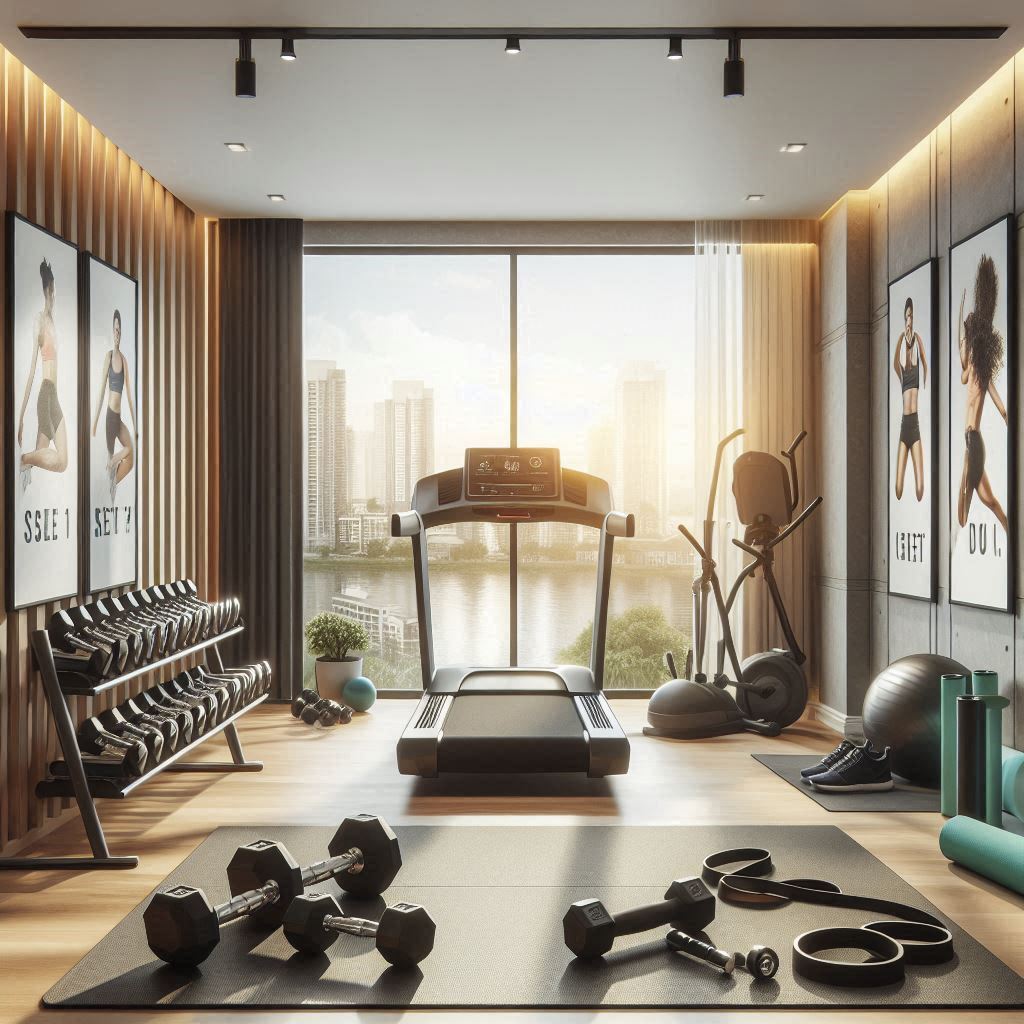
The truth is, you don’t need 50 pieces of equipment to build strength, improve cardio, develop power, or train mobility. What you need is five. That’s right—five pieces of intelligent, functional, and space-saving equipment that can be adapted for virtually every training goal imaginable. These tools are portable, durable, and capable of delivering a full-body training experience at home or on the go. Each one does the job of multiple machines, offering not just convenience, but freedom—the ability to train how you want, where you want, without sacrificing results.
This article explores the five essential tools every home gym should include. These are not gimmicks or trendy devices—they are battle-tested, coach-approved instruments that professional athletes, trainers, and military operators use every day. Whether you’re in a small apartment, a garage, or a full home studio, these five pieces will form the backbone of your fitness arsenal. With them, you can accomplish almost any physical goal—without a commercial gym membership and without giving up valuable space in your home.
1. Kettlebells: The One-Tool Wonder
If there’s a single tool that could be considered the Swiss Army knife of home fitness, it’s the kettlebell. A simple iron or steel ball with a handle, the kettlebell is a compact powerhouse of functionality. With origins in Russian strongman culture, the kettlebell has stood the test of time not because of marketing hype, but because of the unmatched versatility it offers. This single piece of equipment can be used for strength, power, cardio, flexibility, balance, and endurance. More importantly, it blends all these aspects together into dynamic, full-body movements that engage multiple muscle groups at once.
Training with kettlebells requires and builds coordination, timing, and control. Unlike machines, which isolate muscles in fixed paths, kettlebells demand your body to move in unison. A simple swing recruits the hips, glutes, hamstrings, core, and grip—all while spiking your heart rate. The Turkish get-up, another classic kettlebell movement, builds mobility, stability, and shoulder strength in one continuous, flowing effort. Even basic presses and squats become more challenging with a kettlebell due to its off-center mass and shifting load.
For the home gym, kettlebells are a dream. They take up very little space and last a lifetime. A few well-selected weights—perhaps one lighter bell for endurance work and one heavier for strength—can replicate the benefits of an entire rack of dumbbells or a suite of cable machines. And because kettlebell training often involves ballistic movements, you get the added benefit of conditioning and cardiovascular development without the need for a treadmill or bike. For anyone seeking lean muscle, explosive power, or a functionally fit physique, the kettlebell delivers more per square inch than almost any tool on the market.
2. Suspension Trainer: Gravity Meets Simplicity
A suspension trainer—such as a TRX or similar brand—may not look like much at first glance. Two straps, a few handles, and an anchor point. But what it lacks in visual complexity, it more than makes up for in training potential. This tool allows you to use your own body weight against gravity to perform an enormous range of exercises. From basic movements like rows and push-ups to advanced exercises like atomic push-ups and single-leg pistol squats, the suspension trainer turns any space into a high-performance training environment.
The genius of the suspension trainer lies in its scalability. By simply adjusting your body angle, you can increase or decrease the difficulty of nearly any exercise, making it perfect for both beginners and seasoned athletes. Every movement requires core engagement, making even basic pushes and pulls more effective than their traditional counterparts. The instability of the straps also trains balance and coordination, which helps build functional strength that transfers to sports, daily activities, and injury prevention.
One of the most practical advantages of a suspension trainer is its portability. It weighs almost nothing, fits into a small bag, and can be anchored to a door, pull-up bar, or tree branch in seconds. This makes it ideal for travelers, apartment dwellers, and anyone working with limited space. When used regularly, the suspension trainer can replace machines like the lat pulldown, seated row, leg curl, and even many forms of core training equipment. It brings out the best in your body by forcing it to stabilize, coordinate, and control every inch of movement—something machines can’t replicate.
3. Adjustable Dumbbells: Compact Strength on Command
Traditional dumbbells are a staple of strength training for good reason. They offer a natural range of motion, allow for unilateral training, and support a wide range of movements. But in a home gym, space is a premium, and having a rack of ten or twenty different dumbbells simply isn’t feasible for most people. Enter adjustable dumbbells—a smart, compact solution that lets you switch between weight settings in seconds and pack an entire weight room into a single pair.
Adjustable dumbbells combine the functionality of an entire dumbbell rack into one compact, space-saving design. Most systems allow for quick and smooth weight changes, enabling you to move through drop sets, supersets, or circuits without interruption. Whether you’re performing heavy presses, high-rep curls, lunges, or rows, adjustable dumbbells adapt to the intensity and volume of your workout. They’re ideal for full-body training, isolated strength work, or metabolic conditioning circuits.
One of the most underrated advantages of adjustable dumbbells is how they simplify programming. Instead of worrying about which dumbbell to use or investing in multiple weights over time, you have everything you need in one package. They’re cost-effective in the long run, durable enough to withstand years of training, and sleek enough to store in a closet or under a bed. With a single pair, you can perform virtually every movement in a traditional gym program—minus the clutter, cost, and maintenance of dozens of individual dumbbells.
4. Resistance Bands: Small Size, Massive Value
Resistance bands are often underestimated because of their lightweight appearance and association with rehabilitation or warmups. But when used properly, bands are one of the most powerful and versatile tools in the entire home gym arsenal. They offer a unique type of resistance that differs from traditional weights—variable resistance that increases as the band stretches. This makes every exercise more challenging at the top of the range of motion, which often corresponds to the point of highest muscular activation.
For strength training, bands can mimic nearly any movement you’d do with weights: presses, rows, squats, curls, and extensions. They can also be used to enhance barbell lifts by adding resistance to deadlifts or squats, increase time under tension, and provide safe alternatives for people recovering from injuries. For mobility and recovery, bands are unmatched. They assist in stretching, joint mobilization, and activation drills that prepare your body for harder efforts or restore it afterward.
The practical benefits are immense. Resistance bands are lightweight, extremely portable, and require almost no storage space. A single set can fit in a small drawer and travel with you anywhere. Despite their size, they can replace an entire cable machine, especially when paired with a door anchor or pull-up bar. They allow for multiple angles, constant tension, and joint-friendly loading, which makes them especially valuable for those with limited mobility or joint issues. They’re also one of the most affordable tools in fitness—offering hundreds of exercises for the price of one gym day pass.
5. The Weighted Sandbag: Functional Strength in its Rawest Form
Among all training tools, the weighted sandbag stands out as one of the most brutally effective and humbling. Unlike dumbbells or barbells, a sandbag is an unstable, awkward load. It shifts and sags unpredictably, requiring constant adjustment and full-body engagement. Every rep with a sandbag is a battle not just against weight, but against the lack of structure—and that’s what makes it so powerful. This kind of training builds not only muscles but resilience, coordination, and true functional strength.
In terms of versatility, the sandbag holds its own against any piece of equipment. It can be used for lifts, throws, drags, carries, squats, presses, cleans, and slams. You can train power, endurance, or grip strength simply by changing the movement pattern and the load. Carrying a sandbag across a field, shouldering it repeatedly, or pressing it overhead while it shifts unpredictably all force the body to work as a cohesive unit. These compound movements develop real-world strength—the kind used in sports, combat, and labor-intensive tasks.
For a home gym, sandbags are an excellent addition because they are relatively inexpensive and space-efficient. Most commercial sandbags come with filler bags, allowing users to adjust the weight as needed. You can go heavy for strength-based work or light for high-rep conditioning. Moreover, unlike a barbell or machine, a sandbag doesn’t require a rack, plates, or specialized flooring. You can toss it, slam it, or drag it across rough surfaces without damaging it. Its simplicity is its strength, both literally and metaphorically.
The sandbag also teaches mental toughness. It’s not as comfortable as training with symmetrical, padded machines. It doesn’t feel clean or perfect. But in that discomfort lies one of its greatest benefits—it demands focus, grit, and determination. Every awkward rep builds not just muscle, but mindset. For anyone looking to replicate the intensity of manual labor, combat training, or athletic performance, the sandbag is an irreplaceable tool in the minimalist arsenal.
6. The Power of Pairing: Combining Tools for Maximum Impact
While each of these tools—kettlebells, suspension trainers, adjustable dumbbells, resistance bands, and sandbags—can stand alone, their true potential is unlocked when they are strategically combined. In a well-designed home gym, these tools complement each other perfectly, creating a training environment that covers every physical domain. Strength, endurance, mobility, power, and stability are all addressed when you thoughtfully rotate between them or blend them into circuits.
For example, kettlebells and suspension trainers pair beautifully. You can perform heavy kettlebell swings or squats for lower-body power, then immediately transition to suspension rows or atomic push-ups for upper-body and core work. This creates balanced, time-efficient training sessions that hit multiple movement patterns in one go. Similarly, resistance bands can be used to warm up the joints before sandbag work, or to add accommodating resistance to dumbbell lifts by increasing the tension throughout the range of motion.
These tools also allow for intuitive programming. You don’t need a rigid split or a complicated spreadsheet. Because they all involve full-body activation, you can build workouts around time, circuits, movement patterns, or goals. You can program a metabolic finisher with bands, kettlebells, and bodyweight. You can train maximal strength with heavy sandbag carries and dumbbell presses. Or you can focus on active recovery using suspension trainers and light bands. The options are as endless as your creativity.
From a logistical standpoint, combining these tools also means you never outgrow your gym. As you get stronger, you simply add complexity, speed, volume, or new movement combinations. You don’t need to buy more machines—you just evolve your training style. This adaptive quality makes your home gym a long-term investment in your health, not a short-term fad. With these five tools and a bit of imagination, you can train at a world-class level in your garage, backyard, or spare bedroom.
7. Efficiency and Space: Why Less Is So Much More
One of the biggest reasons people hesitate to build a home gym is space. Most assume they need an entire room, heavy-duty flooring, racks, and enough square footage to rival a commercial gym. But that’s a misconception rooted in outdated thinking. The reality is that with the right tools—especially the five mentioned in this article—you can build an elite-level training environment in the space of a yoga mat.
Each of these tools is designed with adaptability in mind. Kettlebells can be tucked under a bed. Suspension trainers can hang from a door frame and be stored in a drawer. Adjustable dumbbells occupy the footprint of a shoebox and replace an entire rack. Resistance bands fit in your backpack, and sandbags can be stacked or deflated when not in use. Together, these tools allow you to train your entire body in less than 30 square feet. You don’t need a dedicated room—you need a dedicated mindset.
But beyond the physical footprint, the time efficiency is what truly sets a minimalist home gym apart. You eliminate travel time, line waits, and equipment sharing. You can warm up, train, and recover in the same space. You can hit a brutal 20-minute circuit or an hour-long strength session without ever leaving your home. For busy professionals, parents, or anyone juggling multiple responsibilities, this efficiency isn’t just convenient—it’s transformative.
The minimalist approach also sharpens your focus. With fewer distractions and more intention, you train smarter, not just harder. You learn to master movements, progress them over time, and tune into your body’s feedback. You eliminate the noise—no blaring music, no mirrors feeding ego, no unnecessary machines. Just you, your tools, and the work. That kind of environment cultivates discipline and consistency, two qualities far more important than any piece of fancy equipment.
8. The Psychology of Minimalist Training: Discipline Over Distraction
There’s a psychological advantage to training with fewer tools and greater purpose. In a commercial gym, it’s easy to drift—switching machines aimlessly, checking your phone between sets, or getting lost in the distractions of mirrors, music, and chatter. But a minimalist home gym strips away the clutter. It forces you to be deliberate. Every exercise, every rep, every session is a choice. And that choice builds discipline.
When you train with limited tools, you’re compelled to make each one count. You can’t rely on novelty to keep you interested—you rely on progress. You learn to track performance, master form, and push through mental resistance. Over time, this approach creates stronger habits, clearer focus, and deeper commitment. Your gym becomes a sacred space—not just a place to burn calories, but a place to sharpen your mind and body.
This mental clarity also reduces decision fatigue. You don’t spend 15 minutes wondering what machine to use or how to structure your workout. With kettlebells, bands, or a sandbag, you simply get to work. You focus on movement quality, effort, and consistency—three pillars that drive lasting results. Minimalist training is simple, but it’s never easy. That’s why it works.
Moreover, training at home builds a unique sense of ownership and identity. There’s no one watching. No one pushing you. You show up because you’ve chosen to, and that breeds a powerful sense of self-reliance. You learn to lead yourself, to program for your needs, and to train with integrity. That mindset spills over into other areas of life—work, relationships, and personal goals. A minimalist gym doesn’t just sculpt your body; it forges your character.
Conclusion
Building a home gym that maximizes results without overwhelming your space or budget is entirely possible by focusing on a select few versatile tools. The kettlebell, suspension trainer, adjustable dumbbells, resistance bands, and weighted sandbag each bring unique strengths that, when combined, offer a comprehensive approach to fitness. They allow users to train strength, endurance, mobility, power, and stability in a way that traditional gyms and bulky equipment cannot. Beyond physical benefits, adopting a minimalist home gym fosters discipline, efficiency, and mental clarity, creating an environment that cultivates not only physical transformation but also personal growth and resilience. Embracing this pared-down arsenal empowers individuals to reclaim control over their health, adapt workouts to any space or schedule, and develop sustainable, lifelong fitness habits. In essence, less truly is more, and with these five tools, you have everything needed to build a powerful, effective, and enduring fitness routine at home.
SOURCES
Calatayud, J., Borreani, S., Colado, J. C., Martin, F., & Andersen, L. L. (2015). The benefits of kettlebell training on muscular endurance and functional fitness: A systematic review. Journal of Strength and Conditioning Research.
Farinatti, P., & Castello, J. (2014). Resistance bands as tools for strength and rehabilitation: A comprehensive review. Sports Medicine.
Hammer, S. (2018). The power of bodyweight and suspension training for strength and mobility. International Journal of Sports Science.
Kraemer, W. J., & Ratamess, N. A. (2004). Fundamentals of resistance training: Progression and exercise prescription. Medicine & Science in Sports & Exercise.
Marin, P. J., & Rhea, M. R. (2010). The effectiveness of weighted sandbag training for functional strength development. Journal of Applied Physiology.
Schoenfeld, B. J. (2010). The mechanisms of muscle hypertrophy and their application to resistance training. Journal of Strength and Conditioning Research.
Wagle, J. P., Rote, A. E., & Jorgensen, M. (2020). Minimalist home gyms: Efficiency, psychology, and training outcomes. Journal of Fitness and Health.
HISTORY
Current Version
SEP, 19, 2025
Written By
BARIRA MEHMOOD