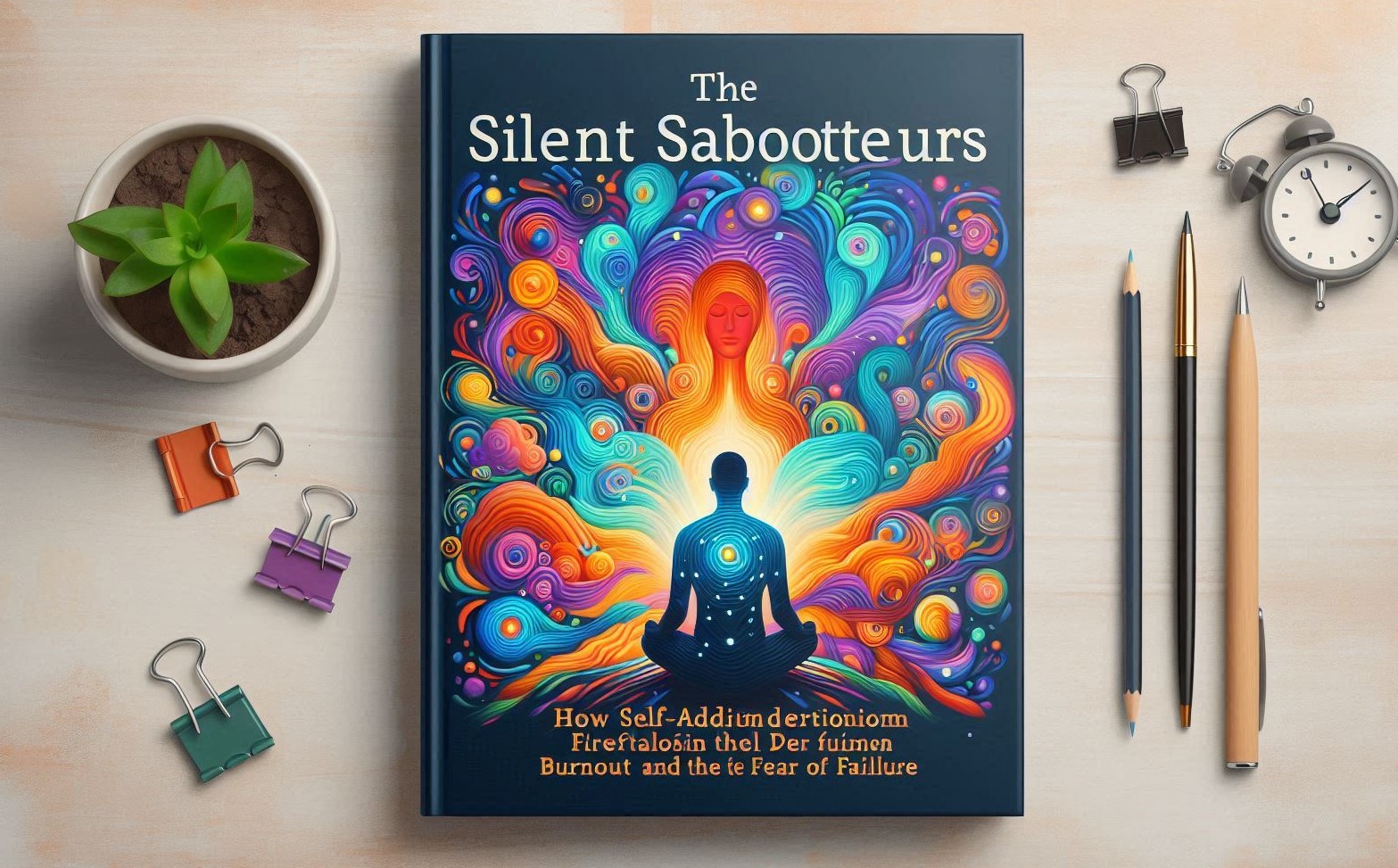
In the contemporary landscape of high achievement, where productivity is often conflated with self-worth, two psychological traits are frequently mischaracterized as virtues: perfectionism and its close cousin, self-admiration (or Ujb in Islamic spirituality). Culturally, we praise the relentless pursuer of flawlessness and the individual with unwavering self-confidence. However, beneath this veneer of excellence lies a toxic synergy that systematically dismantles mental resilience, propels individuals toward clinical burnout, and entrenches a paralyzing fear of failure. This guide argues that self-admiration and perfectionism are not drivers of success but profound dangers, creating a psychological prison where the individual is both the warden and the inmate, perpetually on the path to emotional and physical exhaustion.
Deconstructing the Concepts: Beyond Surface Definitions
To understand their danger, we must first move beyond colloquial understandings. Perfectionism is not simply a preference for order or high standards. Psychologically, it is a multidimensional personality trait characterized by striving for flawlessness and setting excessively high performance standards, accompanied by overly critical self-evaluations and concerns regarding others’ evaluations (Frost et al., 1990). Researchers commonly distinguish between two core dimensions: perfectionistic strivings (the pursuit of high standards) and perfectionistic concerns (the fear of mistakes and negative judgment) (Stoeber & Otto, 2006). While strivings can be adaptive, it is the pervasive concern—the fear of not meeting those standards—that correlates strongly with pathology.
Self-admiration, or Ujb, is a more nuanced concept. In a secular psychological context, it aligns closely with aspects of narcissism, particularly vulnerable narcissism, and maladaptive self-focused attention. It involves an excessive preoccupation with one’s own abilities, achievements, and imagined superiority, often coupled with a fragile ego that requires constant validation. In the Islamic spiritual tradition, from which the term Ujb originates, it is defined as the dangerous state of being impressed with one’s own deeds and qualities to the point of believing oneself inherently superior or immune to failure—a major spiritual disease that leads to pride (kibr) and self-delusion (Al-Ghazali, circa 1100). This spiritual understanding remarkably presages modern psychological findings: an overvaluation of self that blinds one to one’s limitations and vulnerabilities.
The Synergistic Trap: How Self-Admiration and Perfectionism Reinforce Each Other
The relationship between these traits is cyclical and self-reinforcing. Self-admiration (Ujb) provides the flawed foundation: “I am exceptional, my methods are superior, and my outcomes must reflect this inherent excellence.” This mindset births and justifies perfectionistic standards. The individual believes that only perfect outcomes are worthy of their self-image. Conversely, the relentless pursuit and occasional achievement of high standards (perfectionistic strivings) provide fuel for self-admiration. Each completed task to an impeccable standard becomes evidence for the narrative of specialness. However, this loop is inherently unstable.
The fragility emerges from perfectionistic concerns. The self-admiring individual’s entire self-concept is predicated on flawless performance. Any mistake, setback, or critique is not merely a procedural error; it is an existential threat to a carefully constructed identity. This fusion creates what Flett & Hewitt (2002) identify as socially prescribed perfectionism—the perception that others demand perfection—but internalized through one’s own admiring self-image. The drive is no longer just external; it is an internal dictator, a tyrant born of one’s own misplaced self-regard.
Pathway to Burnout: The Exhaustion of the Eternal Performance
Burnout, as defined by Christina Maslach (1982), is a psychological syndrome emerging from chronic workplace stress, characterized by three dimensions: overwhelming exhaustion, feelings of cynicism and detachment (depersonalization), and a sense of ineffectiveness and lack of accomplishment. The perfectionism-self-admiration nexus attacks all three fronts with systematic efficiency.
- Overwhelming Exhaustion: Perfectionism is cognitively and emotionally draining. The constant hyper-vigilance for mistakes, the protracted rumination over minor details, and the inability to delegate or disengage from tasks (because no one else can meet the self-admired standard) lead to profound mental fatigue. The energy expended is not proportional to the task’s objective requirements but to the psychological need to uphold the self-admired image. Research consistently links perfectionism, particularly perfectionistic concerns, with emotional exhaustion, a core component of burnout (Hill & Curran, 2016). The individual is not just working; they are performing for an internal audience that never applauds, only critiques.
- Cynicism and Detachment: As resources deplete, a defensive cynicism emerges. Projects, colleagues, and even personal goals may become objects of contempt. This detachment serves as a protective barrier. If the self-admiring perfectionist begins to doubt their ability to achieve perfection, one defense is to devalue the task itself—“This is beneath me” or “This system is flawed, so why bother?”—thus preserving the crumbling self-image. This mirrors the depersonalization dimension of burnout, where one distances oneself psychologically from work.
- Ineffectiveness and Lack of Accomplishment: Ironically, the pursuit of perfection often sabotages actual accomplishment. Paralysis by analysis, procrastination born of fear of starting imperfectly, and an inability to complete projects (as they can always be slightly better) result in diminished productivity. When outcomes inevitably fall short of the impossible standard, the individual feels ineffective. This confirms the secret fear underlying the self-admiration: that they are, in fact, an impostor. Studies show that maladaptive perfectionism predicts increased burnout and decreased academic and job performance over time (Zhang et al., 2007).
The self-admiration component exacerbates this by preventing help-seeking. Admitting exhaustion is seen as a failure of character, a crack in the façade of superior capability. Thus, the individual suffers in silence, pushing further into the burnout cycle, believing their “specialness” should make them immune to such mundane ailments.
Cultivating the Fear of Failure: The Shadow of the Idealized Self
Fear of failure is not a simple aversion to negative outcomes. It is a complex cognitive network involving the anticipation of shame, the withdrawal of love or status, and damage to self-worth. For the individual entangled in self-admiration and perfectionism, failure is catastrophic because it is defined so broadly: any outcome short of ideal is a form of failure.
Psychologists Conroy, Willow, & Metzler (2002) identified multiple facets of fear of failure, including fear of experiencing shame and embarrassment, fear of devaluing one’s self-estimate, and fear of having an uncertain future. All are amplified in this context. A mistake is not an error; it is an embarrassment that shatters the self-admired image. A poor evaluation devalues not just a single performance but the core self-estimate of being “exceptional.” The future becomes uncertain because the entire life narrative—built on a track record of supposed flawlessness—is thrown into question.
This fear becomes a motivator in the short term but a paralyzer in the long term. It fuels the compulsive checking, over-preparation, and avoidance of challenges that are hallmarks of perfectionism. The individual may begin to avoid opportunities for growth or visibility—a phenomenon known as self-handicapping—whereby they create obstacles to their own success to provide a ready-made excuse for potential failure. If you don’t try, you can’t fail in a way that matters. This protection of the self-admired image comes at the cost of growth, learning, and genuine achievement. The research is clear: perfectionistic concerns are a robust predictor of heightened fear of failure (Sagar & Stoeber, 2009).
The Spiritual Dimension: Ujb as a Fatal Arrogance
The spiritual perspective, particularly from Islamic ethics, offers a profound diagnosis. Al-Ghazali (circa 1100), in his seminal Ihya Ulum al-Din (The Revival of the Religious Sciences), dedicates extensive discussion to Ujb. He describes it as a “veil” that blinds a person to their own faults and to the reality that all capability and success ultimately derive from a source beyond the self. This blindness, he argues, is the root of pride (kibr) and leads inevitably to a fall, as the individual becomes heedless of their vulnerabilities and the necessity for continual improvement and humility.
This spiritual fall mirrors the psychological burnout. The exhaustion comes from relying solely on one’s own imagined power. The cynicism and detachment are the soul’s equivalent of the heart hardening. The ineffectiveness is the manifestation of being cut off from a larger source of strength and meaning. The fear of failure, in this framework, is the terror of having the veil of Ujb ripped away, exposing one’s true and contingent nature. Thus, the spiritual and psychological consequences are concordant: a life built on the shaky foundation of self-admiration is a life heading for crisis.
Breaking the Cycle: Pathways to Mitigation and Recovery
Addressing this toxic synergy requires interventions at both the cognitive and identity levels.
- Cultivating Self-Compassion: Kristin Neff’s work on self-compassion presents a powerful antidote. It involves treating oneself with kindness in the face of failure, recognizing one’s suffering as part of the shared human experience, and holding painful thoughts in mindful awareness (Neff, 2003). This directly attacks perfectionistic self-criticism and softens the rigid self-admiration into a more flexible, humane self-regard. Practices like self-compassion meditations have been shown to reduce perfectionism and associated distress.
- Cognitive Behavioral Therapy (CBT) and Acceptance and Commitment Therapy (ACT): CBT can help individuals identify and challenge the all-or-nothing thinking (“If it’s not perfect, it’s worthless”) and the conditional assumptions (“I am only worthy if I am flawless”) that underpin the cycle. ACT emphasizes psychological flexibility—accepting thoughts and feelings without being ruled by them, and committing to value-based action even in the presence of fear. This helps individuals “defuse” from the story of being exceptionally perfect and move toward meaningful action (Hayes et al., 1999).
- Redefining Success and Embracing “Good Enough”: Actively practicing the art of sufficiency is crucial. This involves setting deliberate limits on tasks, practicing delegation, and celebrating completed tasks that are functionally effective rather than aesthetically perfect. The concept of “satisficing” (a portmanteau of satisfy and suffice) from decision-making theory is a valuable tool here.
- Spiritual and Ethical Reorientation: From the perspective of Ujb, the remedy is rooted in humility (tawadu). This is not self-denigration but a realistic assessment of the self—acknowledging strengths without arrogance and weaknesses without despair. Practices of gratitude, focusing on the contributions of others and external factors to one’s success, and engaging in service can dismantle the isolation of self-admiration and reconnect the individual to a community and purpose larger than themselves.
Conclusion
Self-admiration (Ujb) and perfectionism are a dangerous alliance masquerading as a drive for excellence. They construct an identity that is both grandiose and fragile, setting in motion a relentless process that consumes psychological resources, leads inevitably to the emotional, physical, and spiritual depletion of burnout, and fosters a debilitating fear of failure that stifles true growth. Recognizing these traits not as badges of honor but as risk factors is the first step toward liberation. The path forward lies not in raising the standard, but in humanizing it; not in bolstering the admiring self, but in cultivating the compassionate and humble self. True resilience and sustainable achievement are founded not on the fear of being flawed, but on the courage to be imperfectly, authentically human.
SOURCES
Al-Ghazali, A. H. M. (circa 1100). Ihya Ulum al-Din [The Revival of the Religious Sciences].
Conroy, D. E., Willow, J. P., & Metzler, J. N. (2002). Multidimensional fear of failure measurement: The performance failure appraisal inventory. Journal of Applied Sport Psychology, 14(2), 76–90.
Flett, G. L., & Hewitt, P. L. (2002). Perfectionism and maladjustment: An overview of theoretical, definitional, and treatment issues. In P. L. Hewitt & G. L. Flett (Eds.), Perfectionism: Theory, research, and treatment (pp. 5–31). American Psychological Association.
Frost, R. O., Marten, P., Lahart, C., & Rosenblate, R. (1990). The dimensions of perfectionism. Cognitive Therapy and Research, 14(5), 449–468.
Hayes, S. C., Strosahl, K. D., & Wilson, K. G. (1999). Acceptance and commitment therapy: An experiential approach to behavior change. Guilford Press.
Hill, A. P., & Curran, T. (2016). Multidimensional perfectionism and burnout: A meta-analysis. Personality and Social Psychology Review, 20(3), 269–288.
Maslach, C., & Jackson, S. E. (1982). Burnout in health professions: A social psychological analysis. In G. S. Sanders & J. Suls (Eds.), Social psychology of health and illness (pp. 227–251). Lawrence Erlbaum.
Neff, K. D. (2003). Self-compassion: An alternative conceptualization of a healthy attitude toward oneself. Self and Identity, 2(2), 85–101.
Sagar, S. S., & Stoeber, J. (2009). Perfectionism, fear of failure, and affective responses to success and failure: The central role of fear of experiencing shame and embarrassment. Journal of Sport and Exercise Psychology, 31(5), 602–627.
Stoeber, J., & Otto, K. (2006). Positive conceptions of perfectionism: Approaches, evidence, challenges. Personality and Social Psychology Review, 10(4), 295–319.
Zhang, Y., Gan, Y., & Cham, H. (2007). Perfectionism, academic burnout and engagement among Chinese college students: A structural equation modeling analysis. Personality and Individual Differences, 43(6), 1529–1540.
HISTORY
Current Version
Dec 24, 2025
Written By:
SUMMIYAH MAHMOOD